Overview
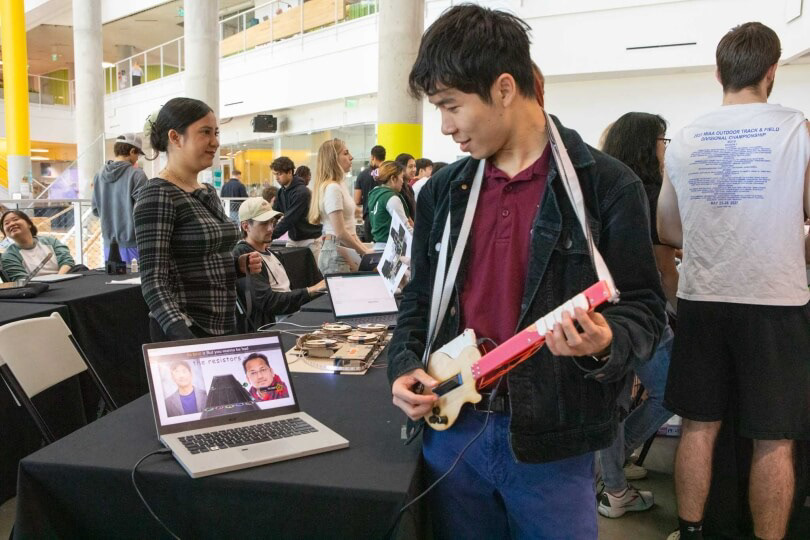
I designed and built a custom Guitar Hero-style controller using a Raspberry Pi Pico and mechanical switches to create a low-latency, highly responsive alternative to commercial controllers. The project focused on improving input precision, durability, and gameplay experience through custom hardware and embedded systems design.
The Challenge
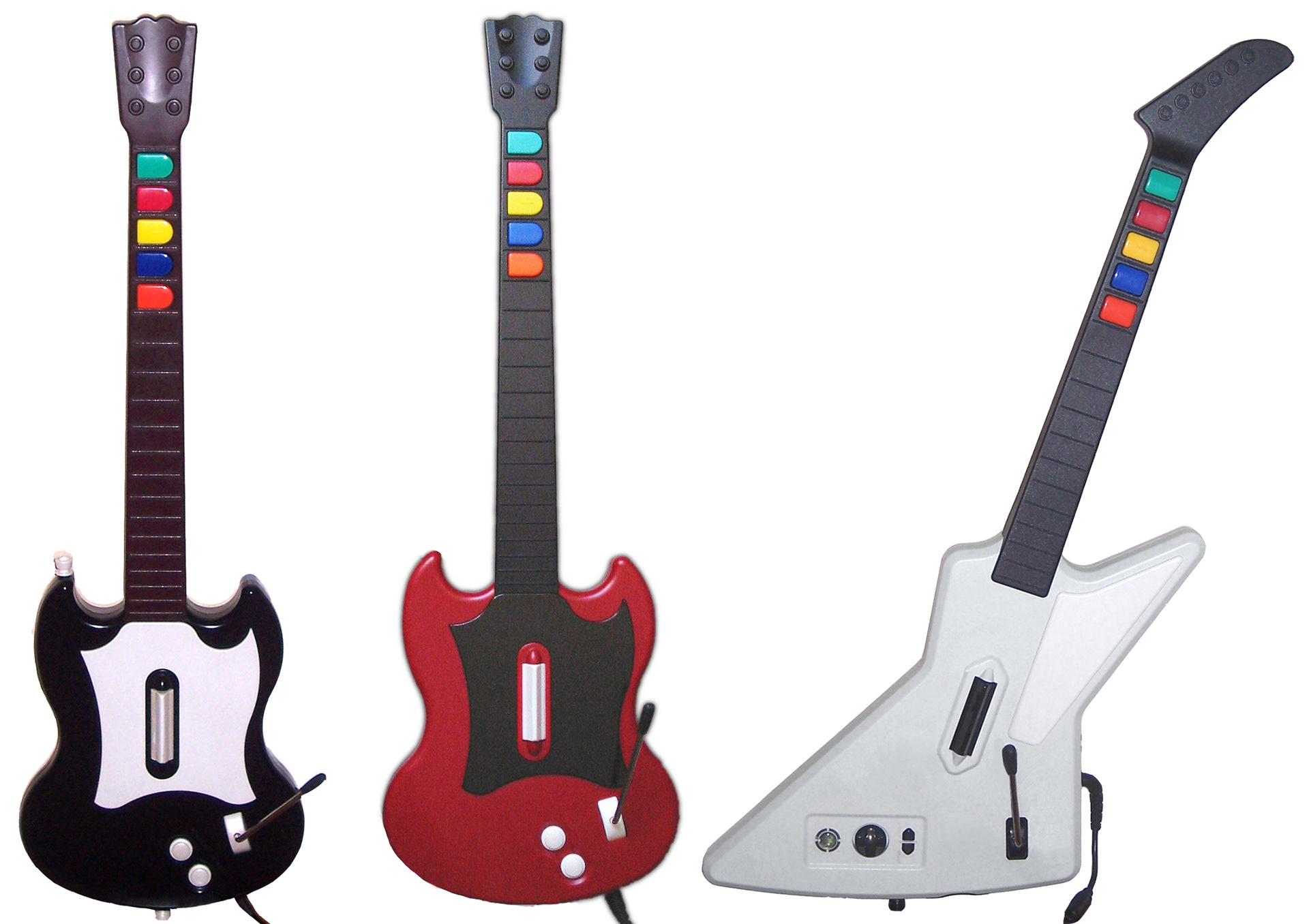
Commercial Guitar Hero controllers are increasingly difficult to find and suffer from latency, wear-prone components, and limited customization. This project aimed to recreate and improve the controller experience by designing a fully custom guitar that could interface with modern rhythm games while delivering faster response times and better tactile feedback.
The system also needed to reliably emulate keyboard inputs for compatibility with Clone Hero while integrating multiple sensors and interactive features.
Design Requirements
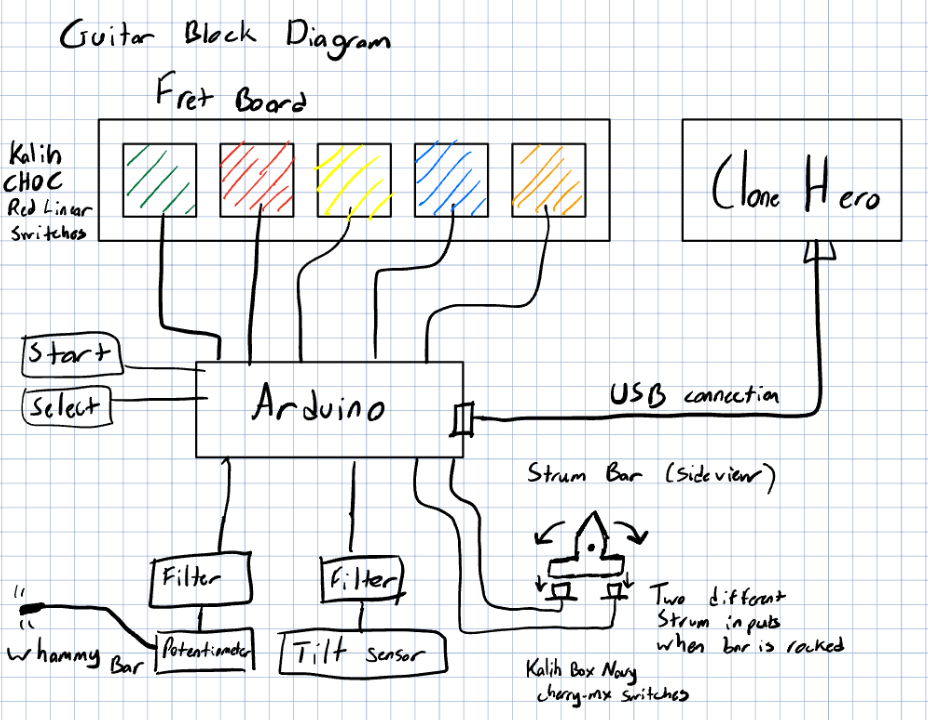
The controller needed to replicate all core Guitar Hero inputs, including fret buttons, strumming, whammy control, and tilt-based “star power” activation. It had to be durable, responsive, and intuitive to play, while integrating cleanly with a computer via Arduino-based input emulation. Low latency and consistent input detection were critical to achieving a high-quality gameplay experience.
My Focus: Guitar System Design
The team split into parallel workstreams, with my work focused on the guitar controller while a separate team developed the drum system. I led the mechanical design, hardware integration, and iterative refinement of the guitar, from physical construction through embedded input handling and gameplay testing.
Approach
The guitar was designed as a fully custom hardware system combining mechanical, electrical, and embedded components.
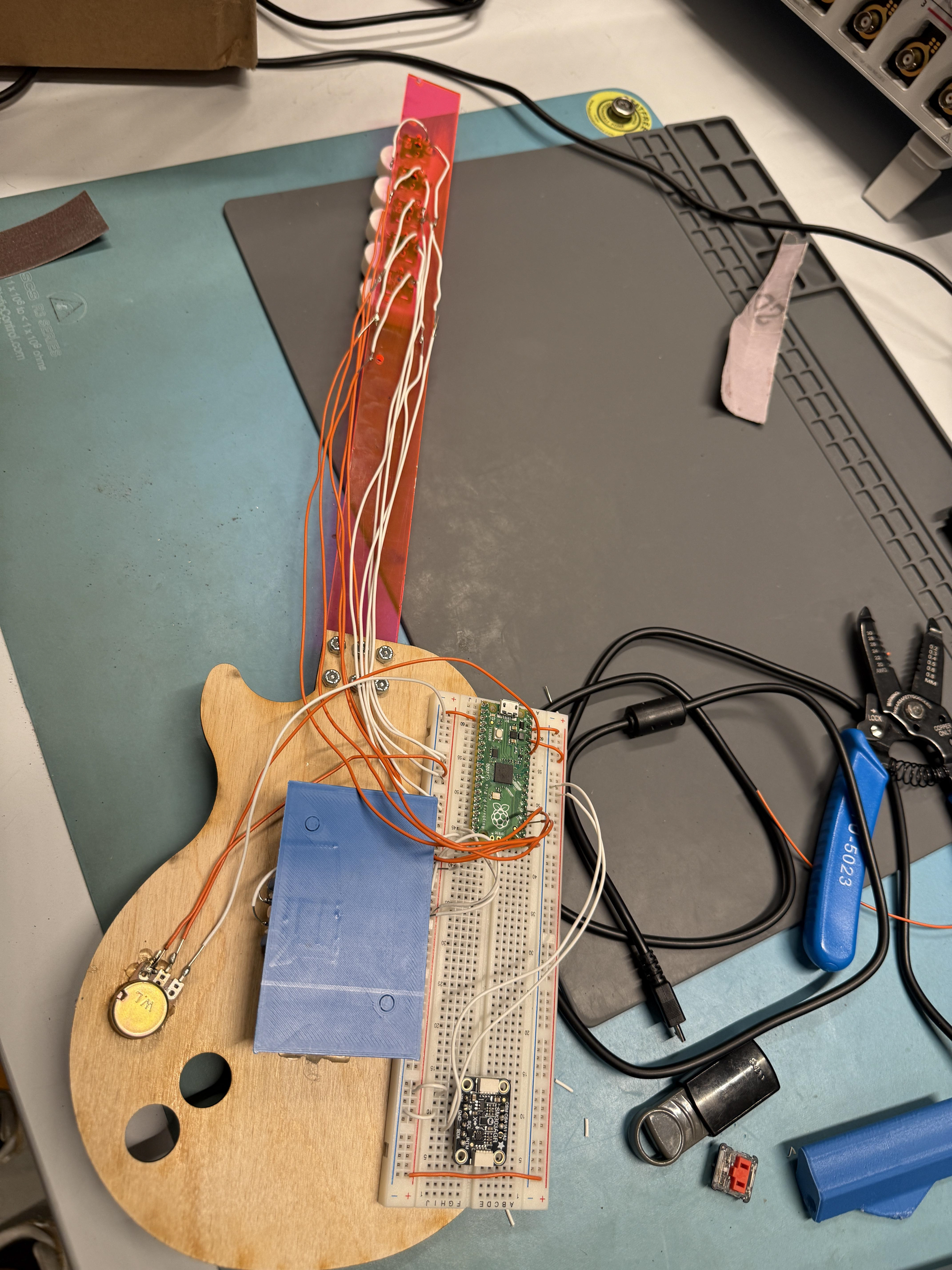
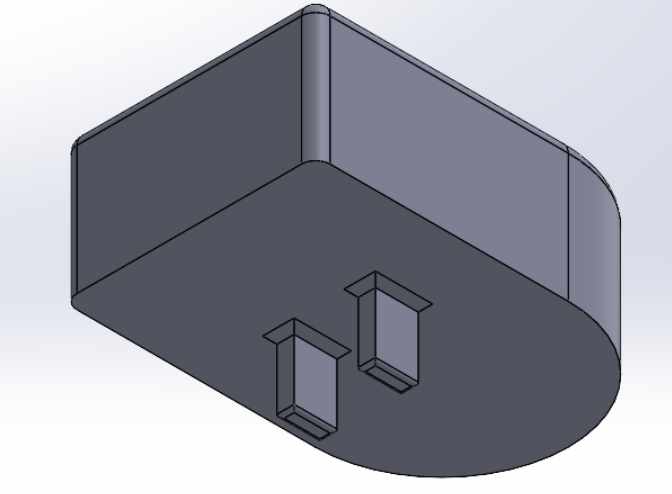
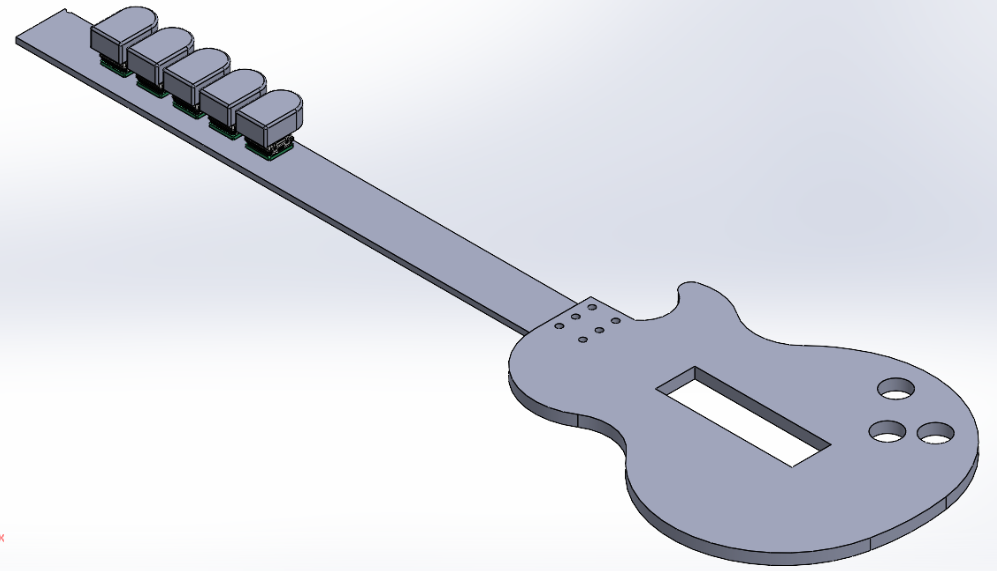
The body and faceplate were constructed from laser-cut wood, while the fretboard used layered acrylic to increase rigidity during play. Custom 3D-printed fret caps interfaced with low-profile mechanical switches, providing significantly improved tactile response compared to traditional membrane-based controllers.
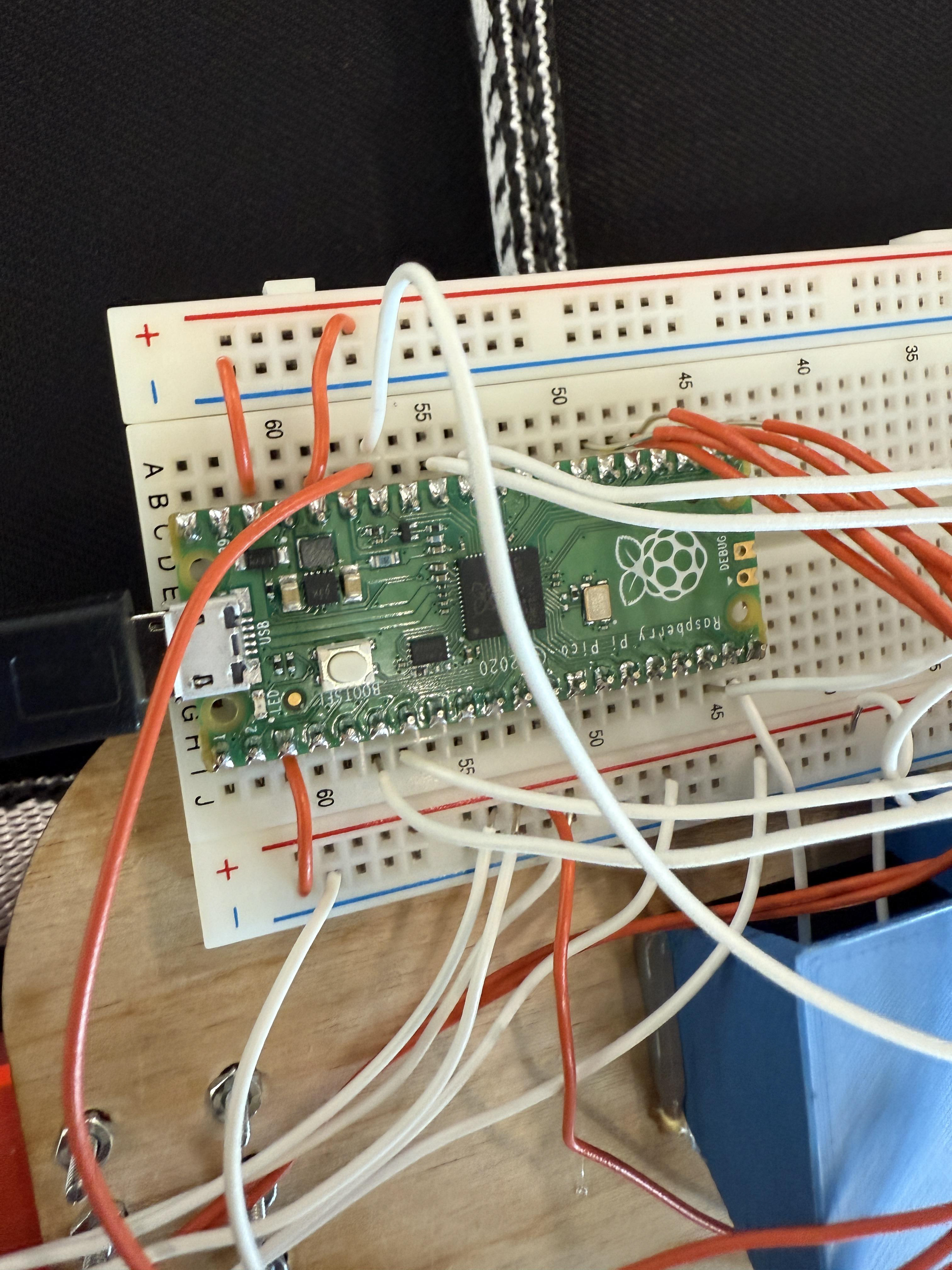
The system was powered by a Raspberry Pi Pico, enabling high polling rates and reduced latency. Inputs were mapped to keyboard signals, allowing seamless integration with Clone Hero while maintaining fast and reliable responsiveness.
Key Features
Mechanical Switch Upgrade:
Instead of standard membrane contacts, the guitar used Kailh CHOC and Cherry MX mechanical switches. This eliminated wear issues found in commercial controllers and provided a crisp, consistent input feel.
Instead of standard membrane contacts, the guitar used Kailh CHOC and Cherry MX mechanical switches. This eliminated wear issues found in commercial controllers and provided a crisp, consistent input feel.
Strum Bar Mechanism:
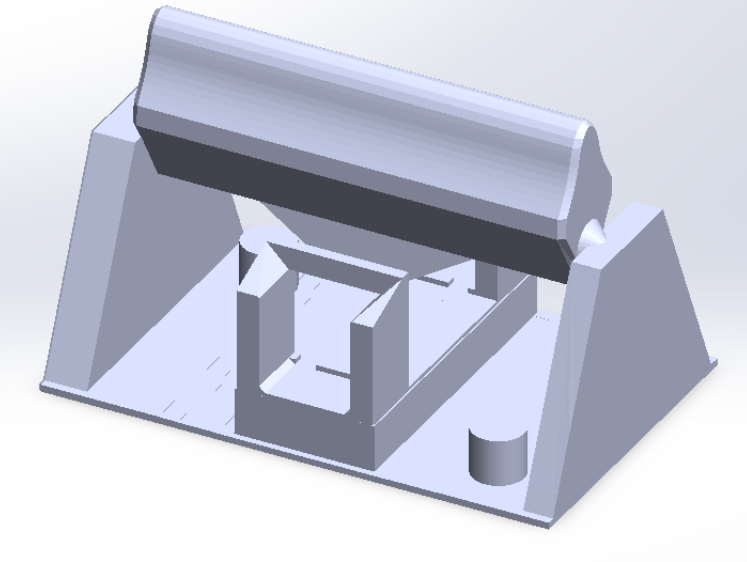
The strum bar assembly was custom designed and 3D printed, using horizontally mounted switches for bidirectional input. Multiple iterations were required to refine tolerances and eliminate dead zones in activation.
The strum bar assembly was custom designed and 3D printed, using horizontally mounted switches for bidirectional input. Multiple iterations were required to refine tolerances and eliminate dead zones in activation.
Whammy Control:
A potentiometer enabled analog-like whammy input. Since keyboard emulation cannot directly represent continuous signals, I implemented a timing-based detection system that translated rapid changes into discrete inputs.
A potentiometer enabled analog-like whammy input. Since keyboard emulation cannot directly represent continuous signals, I implemented a timing-based detection system that translated rapid changes into discrete inputs.
Tilt-Based Star Power:
An onboard accelerometer enabled motion-based input, triggering star power when the guitar was tilted beyond a defined threshold. This replaced traditional ball-bearing sensors with a more robust digital solution.
An onboard accelerometer enabled motion-based input, triggering star power when the guitar was tilted beyond a defined threshold. This replaced traditional ball-bearing sensors with a more robust digital solution.
Challenges
One of the primary challenges was translating analog inputs into discrete keyboard signals without losing gameplay responsiveness. This required careful tuning of thresholds, timing windows, and debounce logic.
Mechanical design also presented challenges, particularly in the strum bar assembly. Early versions suffered from loose tolerances and unreliable activation, requiring iterative redesign and refinement to achieve consistent performance.
Additionally, the thin acrylic fretboard created ergonomic limitations, making extended play less comfortable and highlighting opportunities for future structural improvements.
Outcome
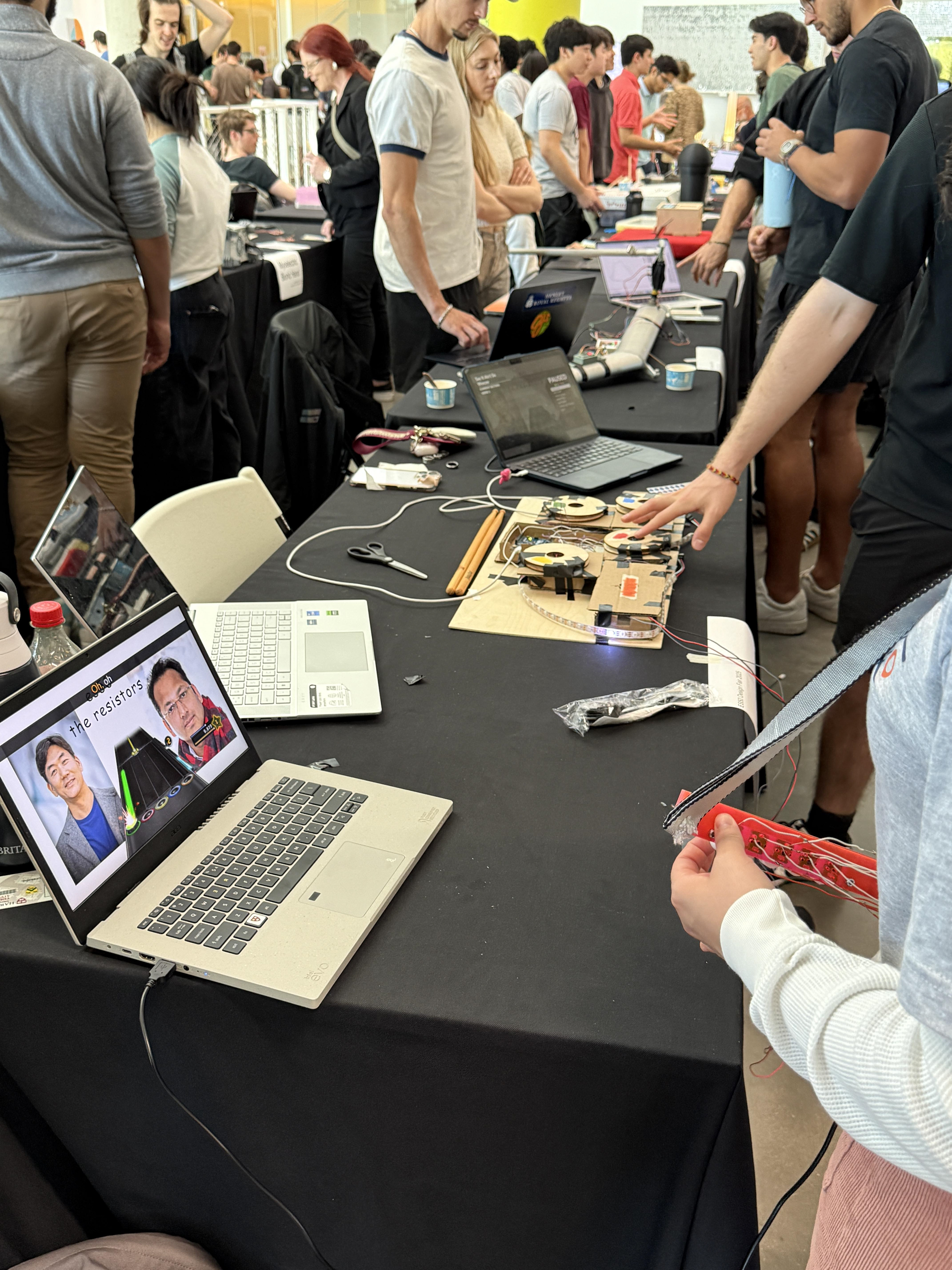
The final guitar controller successfully replicated all core gameplay inputs with improved responsiveness and durability compared to stock controllers. The system achieved low-latency input handling, reliable sensor integration, and a highly tactile user experience.
The project demonstrated how custom hardware and embedded systems design can significantly enhance user interaction in gaming applications, while also reducing cost compared to commercial alternatives.
Reflection
This project strengthened my ability to design integrated hardware systems that combine mechanical components, electronics, and software. It also reinforced the importance of iterative prototyping, particularly when balancing user experience with technical constraints.