Overview
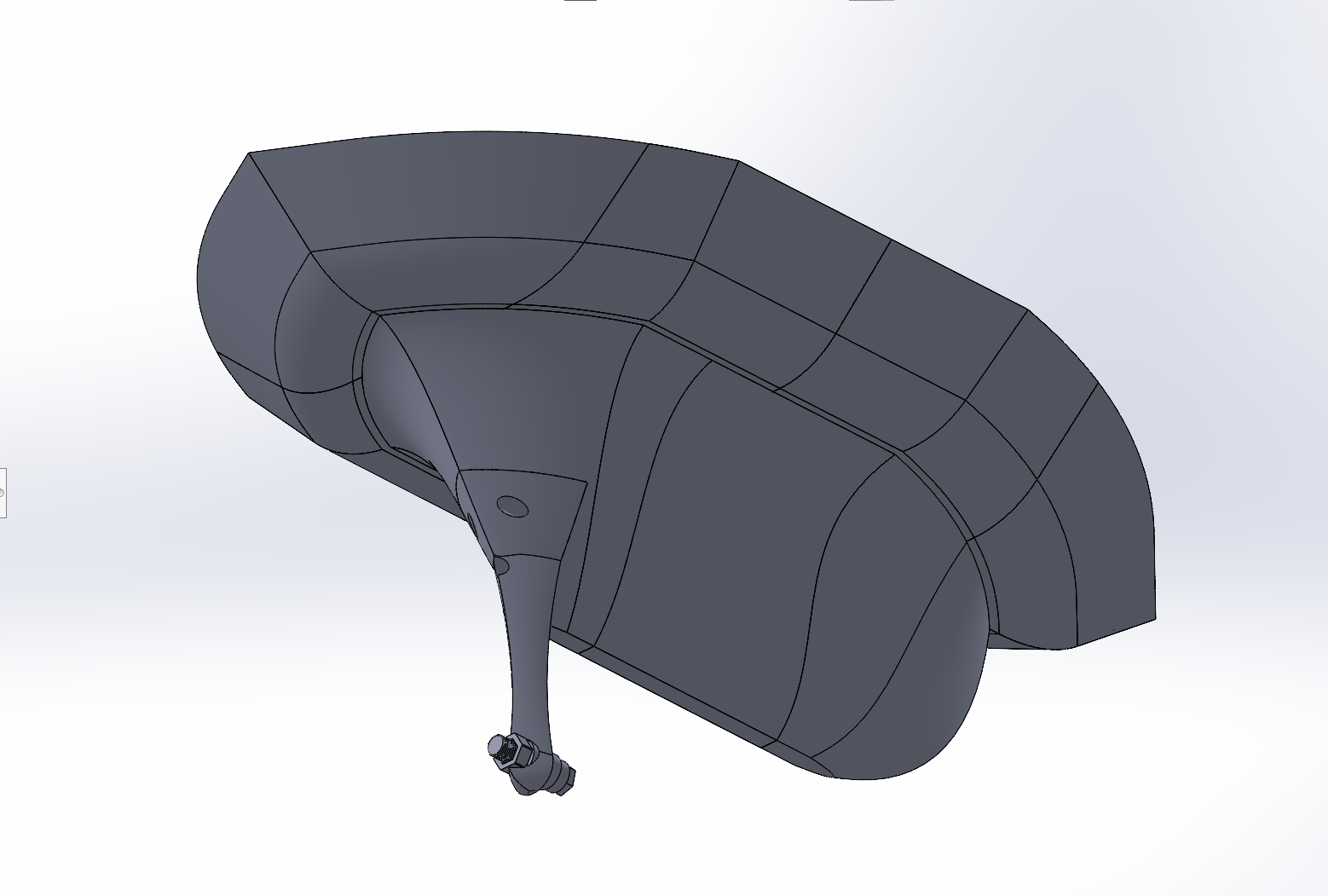
My team and I designed and prototyped a biodegradable propulsion system for an autonomous underwater vehicle (AUV), using pressurized gas as a bioinert actuation method to drive a propeller. The project explores how propulsion systems can be designed to minimize environmental impact while maintaining functional performance in underwater applications. This project was done in collaboration with the Harvard Biorobotics Lab for ES96: Engineering Problem Solving and Design Project.
The Problem
Conventional AUV propulsion systems rely on electric motors, sealed housings, and non-degradable materials. These systems introduce environmental risks, particularly in applications where vehicles may be lost, abandoned, or deployed in sensitive ecosystems.
This project investigates an alternative approach: replacing traditional electromechanical actuation with a bioinert propulsion mechanism, using pressurized gas to drive motion while reducing reliance on persistent materials.
Approach
We pursued a multi-pronged design strategy to evaluate different methods of converting pressurized gas into usable thrust for underwater propulsion. Three distinct propulsion architectures were explored in series, each representing a different approach to energy transfer and fluid interaction.
The first approach investigated a converging-diverging nozzle design, using gas expansion to accelerate flow and generate thrust directly through jet propulsion. This concept focused on maximizing exit velocity and evaluating how compressible gas behavior translates to thrust in an incompressible fluid environment.
The second approach explored a Tesla motor–inspired design, using viscous drag between rotating disks and high-velocity gas flow to generate rotational motion. This concept aimed to create a mechanically simple, enclosed system capable of converting gas flow into shaft work without traditional turbine blades.
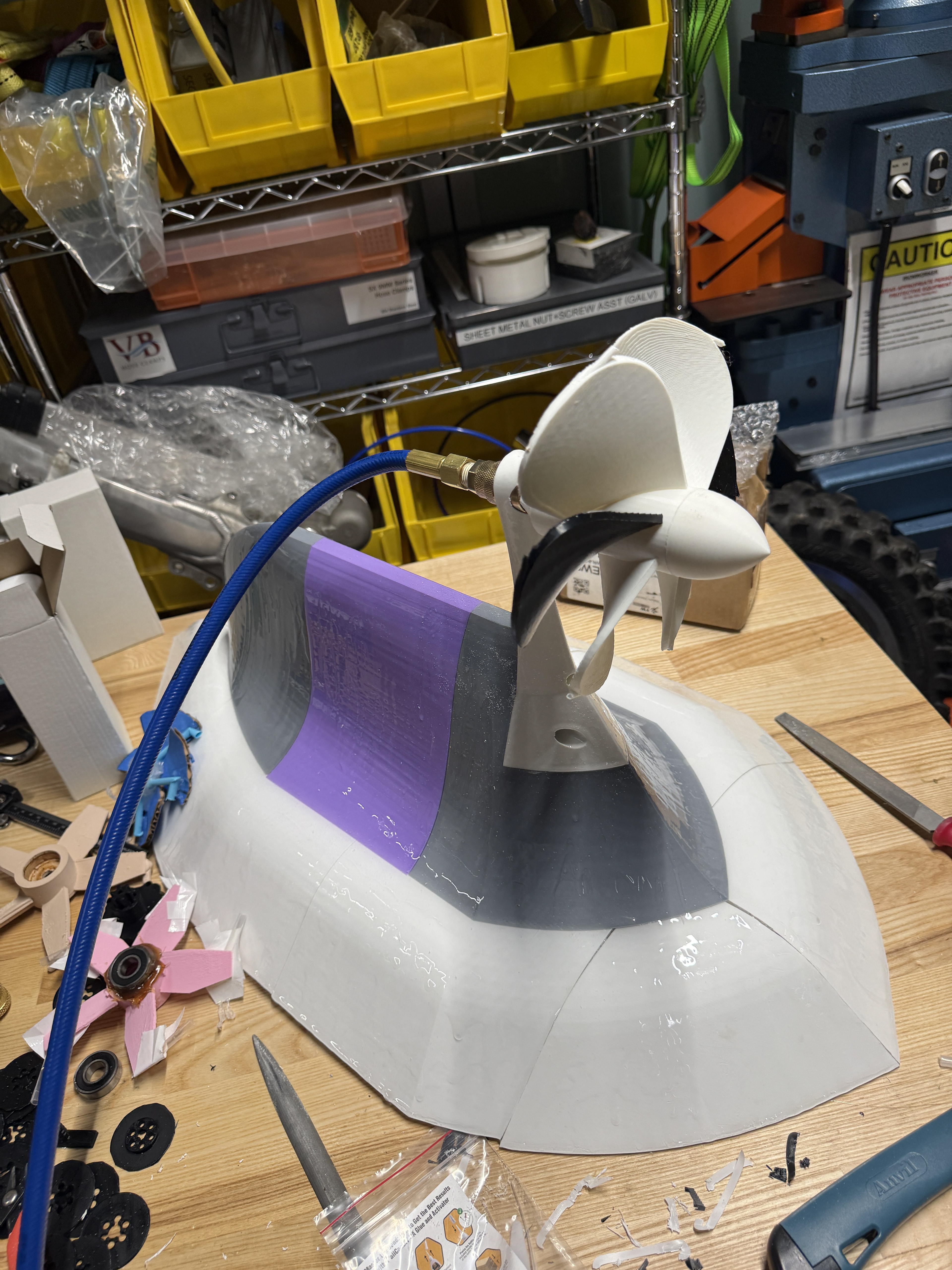
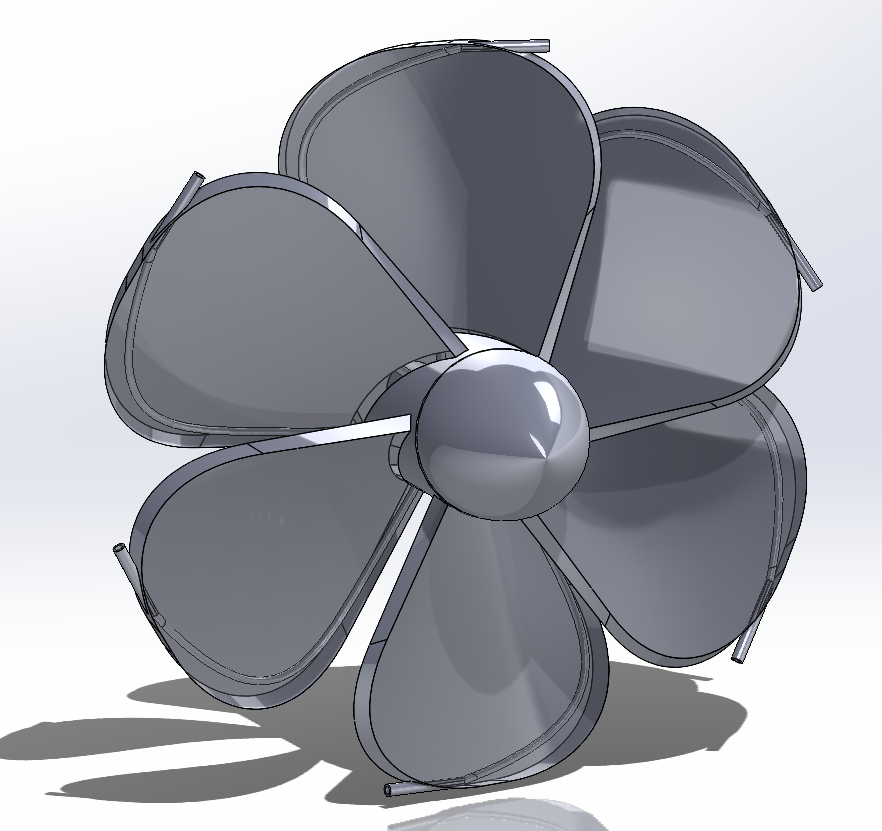
The final and most developed approach was a radially outgassing propeller system, in which pressurized gas was routed through the propeller and expelled radially to induce rotation. This design directly coupled gas flow with propeller motion, enabling a compact, integrated propulsion system.
Each concept was modeled in CAD, prototyped using 3D printing, and evaluated through physical testing. Insights from earlier designs informed subsequent iterations, resulting in a convergent design process that prioritized efficiency, simplicity, and environmental compatibility.
Prototyping & Testing
Each propulsion concept was prototyped using 3D printing and evaluated using a custom-built thrust measurement system. To quantify performance, I designed a pulley-driven force sensing setup, where the propulsion unit was mounted and allowed to pull against a known resistance through a low-friction pulley.
As thrust was generated, the system translated the propulsion force into a measurable load, enabling direct comparison between design iterations. Testing focused on correlating gas input conditions with generated force, as well as comparing performance across the three propulsion architectures. This approach introduced a more rigorous, data-driven evaluation process, informing design decisions and guiding iteration toward more effective configurations.