How I built
the World's First
20 foot
Conductors Baton
in one month
Overview
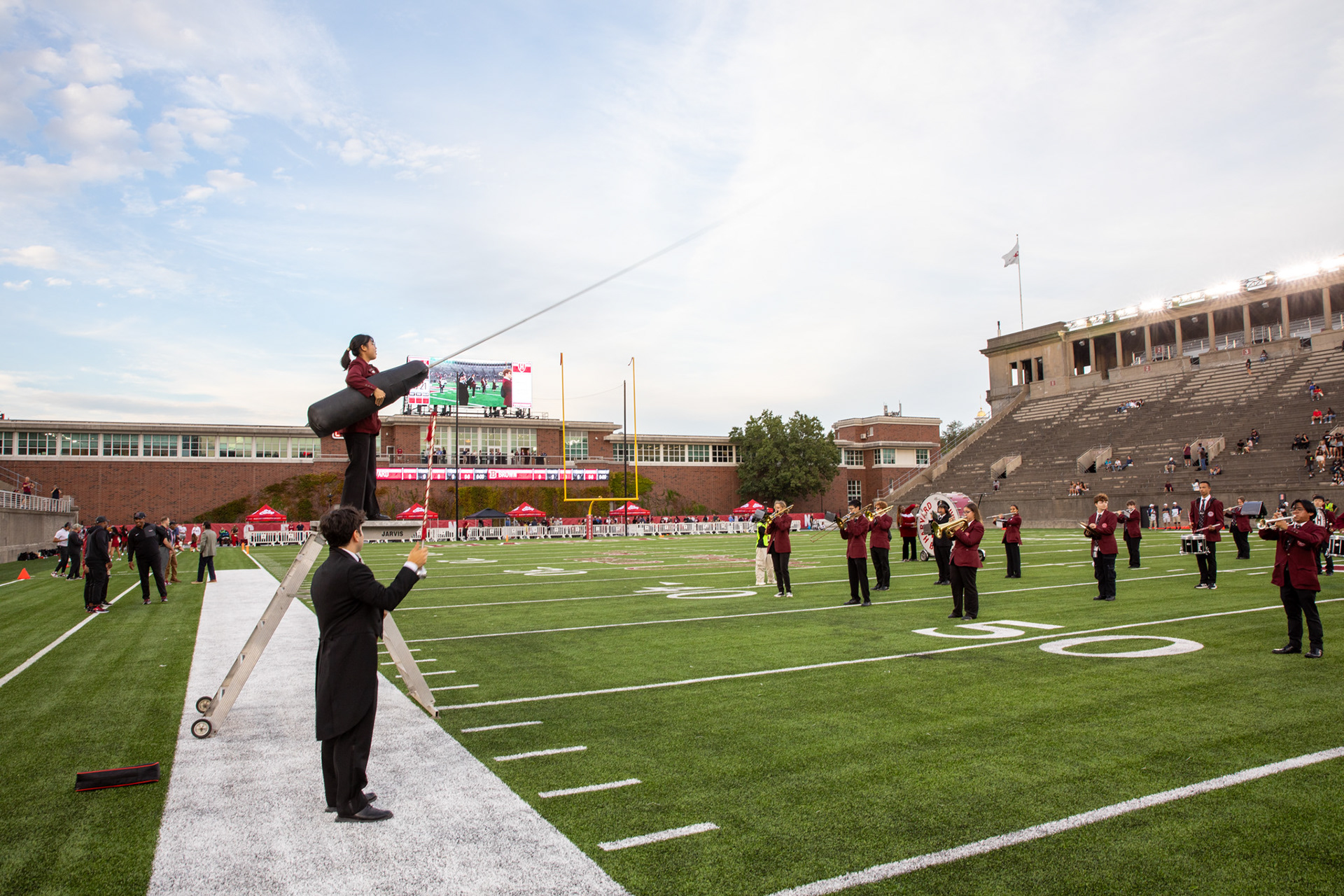
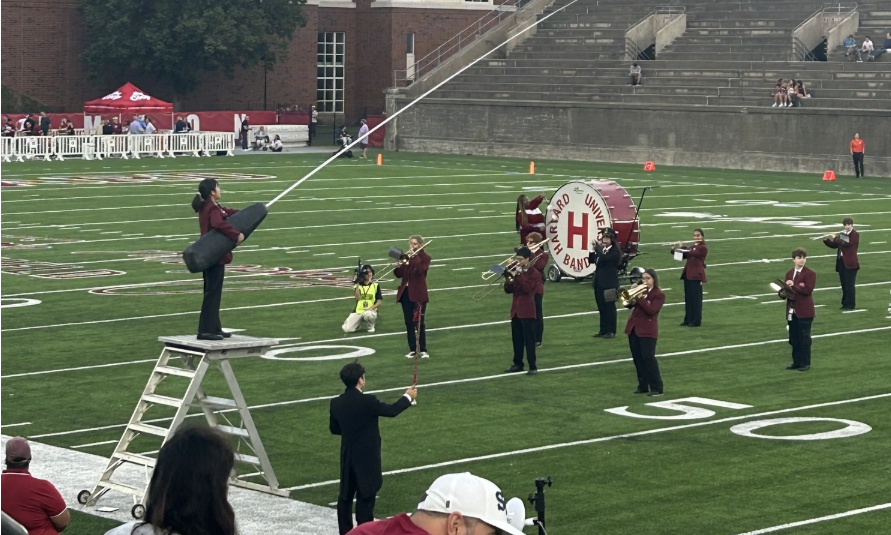
I designed and built a 20-foot conductor’s baton for the Harvard Band to reclaim the world record during the 2025 home opener against Brown. The project combined structural design, rapid prototyping, and material optimization to create a baton that was lightweight, rigid, and fully functional in live performance.
The Challenge
This project required scaling a traditional conductor’s baton to 20 feet while preserving its usability and recognizable form. The baton needed to remain lightweight enough to conduct with, structurally stable under its own weight, and visually consistent with a standard baton—all within a strict budget and timeline tied to a live performance.
The existing official record was 19 feet 4 inches, set by Brown University earlier that year, creating a direct competitive benchmark.
Design Requirements
The baton had to exceed the existing record length while remaining functional for conducting during a live halftime performance. It needed to be completed in time for the September 27, 2025 Harvard vs. Brown football game, operate within a $200 budget, and be durable enough to withstand handling and transport while maintaining its visual identity.
Phase 1: Research and Inspiration:
I began by studying traditional conductor batons and large-scale novelty props to understand how proportions, balance, and stiffness translate when scaled. Maintaining the signature tapered geometry of a baton became a key design constraint, as did ensuring that the structure would not visibly sag under its own weight.
Scaling introduced non-linear challenges: small deflections at short lengths became major structural failures at 20 feet, making stiffness the primary design driver.
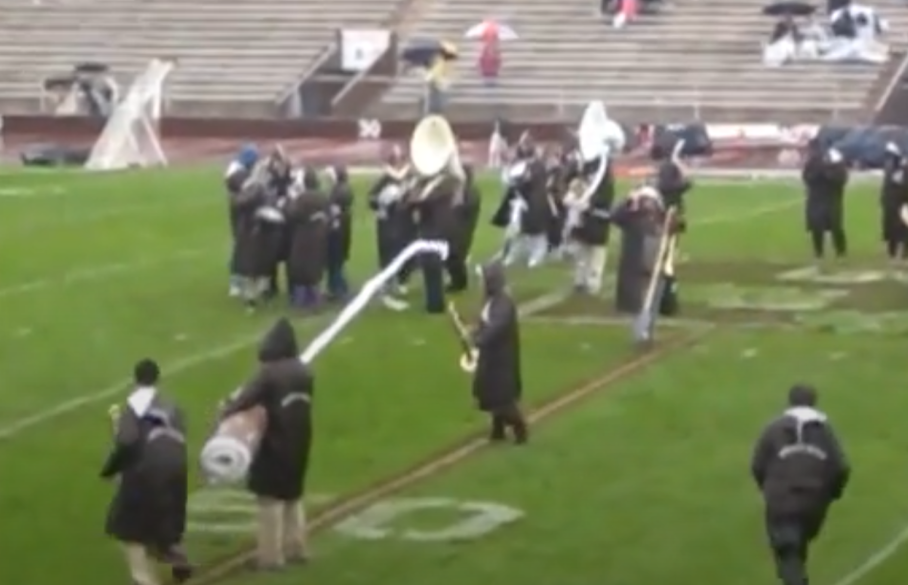
Brown Band 2011 (unofficial 20' )

Penn Band 2007 ( unofficial 15' 9")
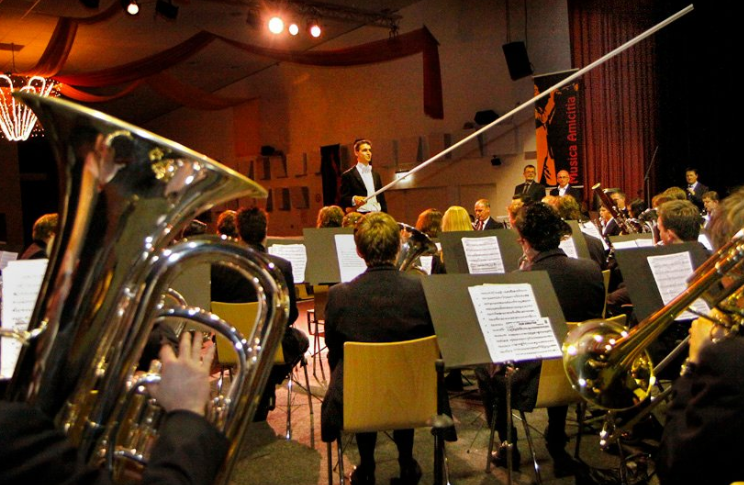
Harmonie Amicitia Roggel 2010 (13' 11")
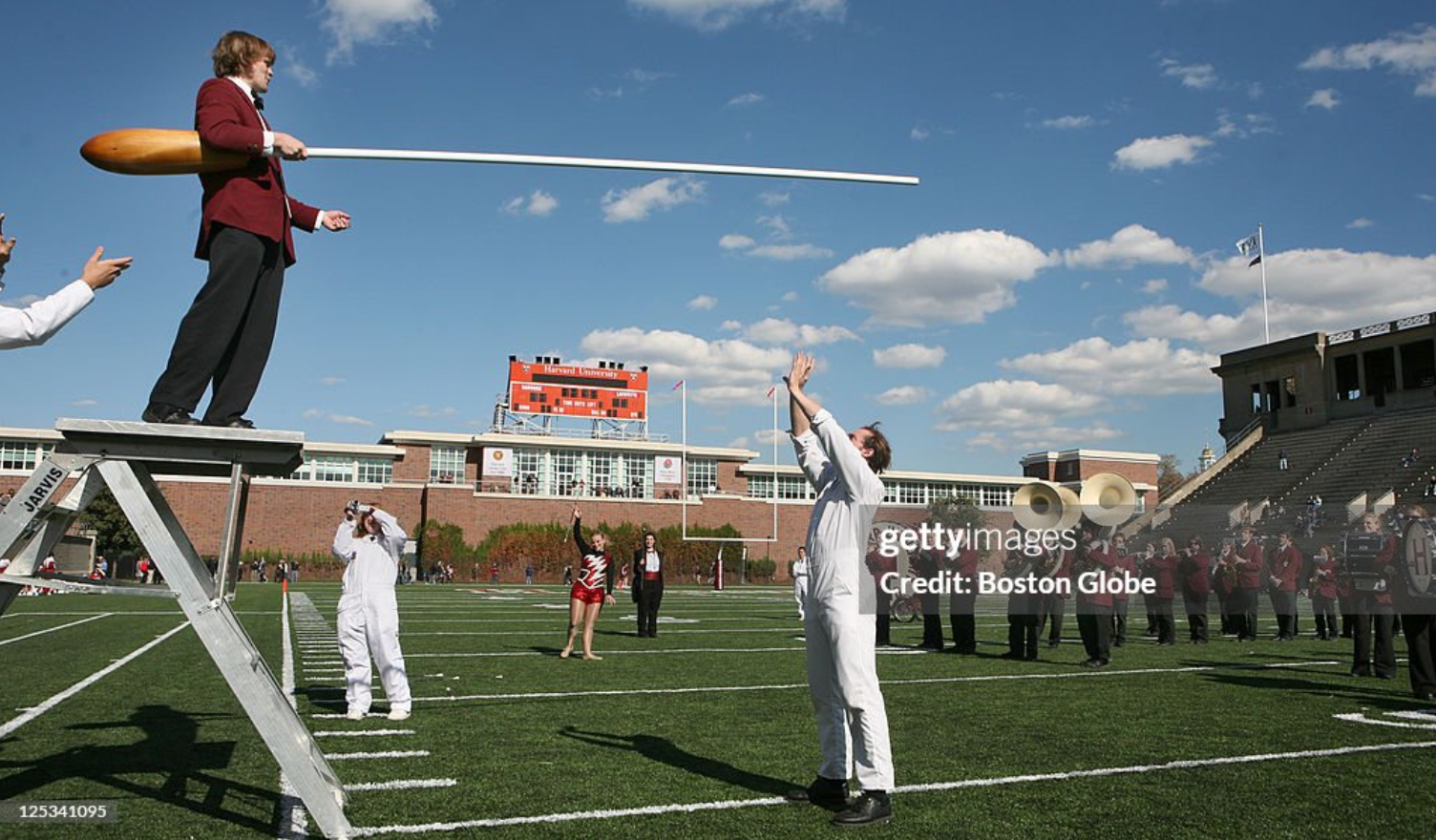
Harvard Band 2006 (12' 6")
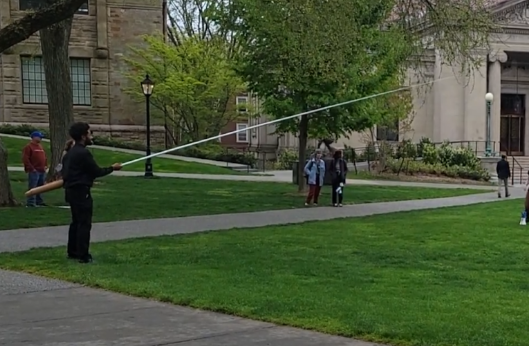
Brown Band 2024 (19' 4")
PHASE 2: Ideation AND TESTING
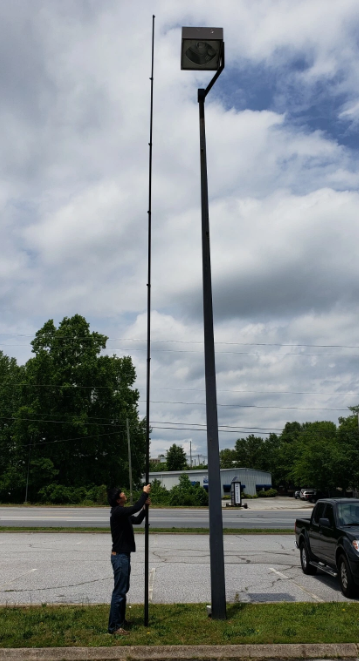
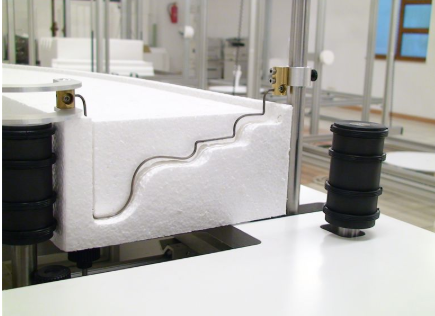
Early prototypes explored foam cylinders reinforced with fiberglass cloth and epoxy, built in 3-foot segments. While these designs worked at small scales, they failed when scaled up due to excessive weight and unreliable connections between sections.
These failures revealed two key insights: first, that distributed reinforcement was too heavy, and second, that a continuous structural core would be necessary to control bending over long spans.

Final Design
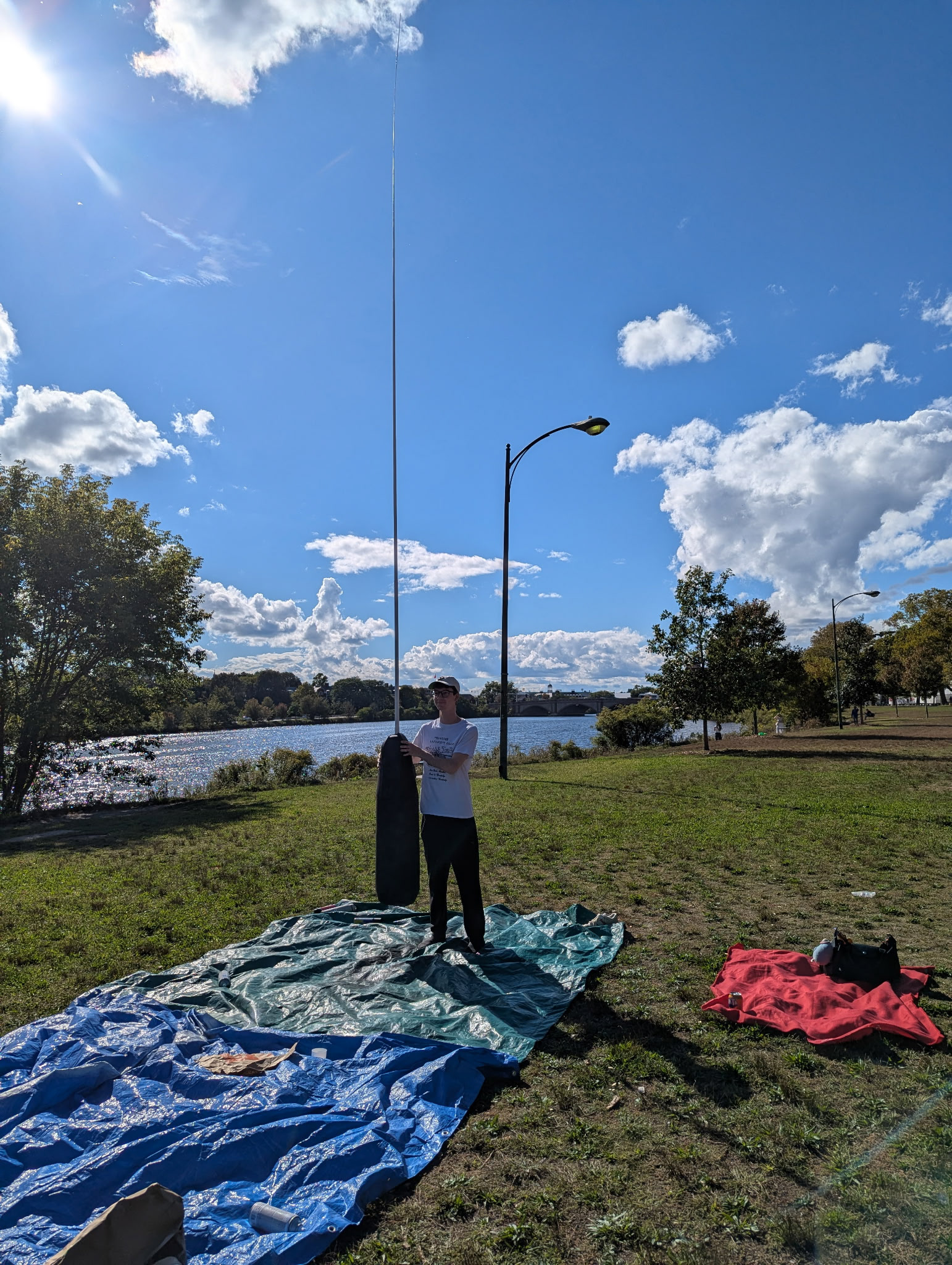
The final baton used a hollow fiberglass structure as its primary load-bearing element, combined with lightweight plastic and cosplay foam to achieve the desired shape and finish. The design maintained the tapered profile of a traditional baton while minimizing weight and maximizing stiffness.
The baton extended to a full length of 20 feet and retracted to approximately 6 feet for transport. Despite its size, it weighed only 6 pounds, allowing it to be handled and conducted in a live performance by Student Conductor Mei Fujimura '27
Key Challenge: Structural Bending
The dominant engineering challenge was excessive bending at the tip. At 20 feet, even small material flexibility resulted in large visible deflections. Transitioning to a hollow fiberglass core dramatically increased stiffness while keeping the structure lightweight, resolving the primary failure mode.
Constraints & Build Process
The project was completed on a $200 budget using largely repurposed and low-cost materials, including discarded plastics and foam. Fabrication took place over the course of a month in Harvard’s lab spaces, following several months of planning, prototyping, and testing.
Outcome
The baton was successfully used in a live performance at Harvard’s home opener against Brown, where it exceeded the previous record length and was unveiled to a stadium audience.
The final design achieved the project’s core goals: it was structurally stable, lightweight, visually accurate, and fully functional in performance. The build demonstrated how thoughtful material selection and structural design can enable extreme scaling of everyday objects.